
The Rongai Route is the only trail that approaches Mount Kilimanjaro from the northern side, near the Kenyan border. Known for its gentle slopes, low traffic, and stunning wilderness landscapes, this route offers a unique trekking experience. Unlike the more crowded southern approaches, Rongai provides a quieter, less-traveled path, making it an excellent choice for trekkers seeking solitude and an authentic wilderness adventure.
Your 6-day trek begins in the remote northern forests, where you may encounter colobus monkeys and diverse birdlife. The trail gradually ascends through heather and moorland zones, offering expansive views across Kenya’s Amboseli plains. Compared to other routes, the ascent on Rongai is steady and manageable, giving climbers time to acclimatize while still being physically challenged.
As you climb higher, the vegetation gives way to the alpine desert, where dramatic views of Mawenzi Peak dominate the horizon. This route allows trekkers to experience both the rugged eastern slopes and the breathtaking scenery of the high-altitude desert before joining the southern circuit for the final push to the summit.
The highlight of the trek is, of course, Uhuru Peak (5,895m) — the highest point in Africa. Summit day begins before dawn, with a challenging but rewarding climb under a canopy of stars. Reaching the summit at sunrise offers a magical experience, with panoramic views of glaciers, volcanic craters, and the vast African plains stretching endlessly below.
The descent follows the Mweka Route, passing through diverse ecological zones back into lush rainforest. By the end of the trek, climbers will have crossed through every climate zone of Kilimanjaro, from tropical forest to arctic summit.
With its scenic variety, quiet trails, and a strong chance of summit success, the 6-day Rongai Route is ideal for those who value a balanced combination of adventure, beauty, and tranquility.
6 Days
5 Nights
MID RANGE
2-10
English, France, Germany, Spain
Scenic ascent through the less-crowded Rongai Route, starting from Kilimanjaro’s northern slopes near the Kenyan border.
Diverse landscapes: lush forest trails, moorlands, alpine desert, and spectacular views of Mawenzi Peak.
Excellent acclimatization profile with gradual elevation gain.
Opportunities to spot unique wildlife on the lower slopes, including colobus monkeys and diverse bird species.
Trekking across open landscapes with panoramic views throughout the journey.
A thrilling midnight summit push to Uhuru Peak (5,895m), the highest point in Africa.
Experienced guides, porters, and cook team ensuring safety, comfort, and cultural insights.
All-inclusive package covering accommodation, meals, park fees, and transfers for a seamless adventure.
Adventure Seekers
Can be customized
Can start any day
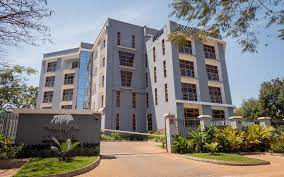
Your journey begins with your arrival at Kilimanjaro International Airport (JRO), where our representative will warmly welcome you. You’ll then be transferred in a private vehicle to your hotel in Moshi, a charming town lying at the foot of the mighty Kilimanjaro. Along the way, catch your first glimpses of local Tanzanian life, with bustling markets, green plantations, and distant views of Africa’s highest peak on a clear day.
Upon reaching your hotel, you’ll check in and have time to relax after your long journey. In the evening, you will meet your mountain guide, who will brief you in detail about the Rongai Route, trek expectations, safety measures, and gear checks to ensure you’re fully prepared. This session is also the perfect opportunity to ask questions and make any final arrangements before the adventure begins.
Dinner will be served at the hotel, where you can enjoy a hearty meal while anticipating the exciting days ahead. Overnight stay will be at your chosen lodge or hotel in Moshi, resting in comfort before the trek begins the next morning.
Accommodation: Kili Wonders Hotel (or similar)
Meals: Dinner
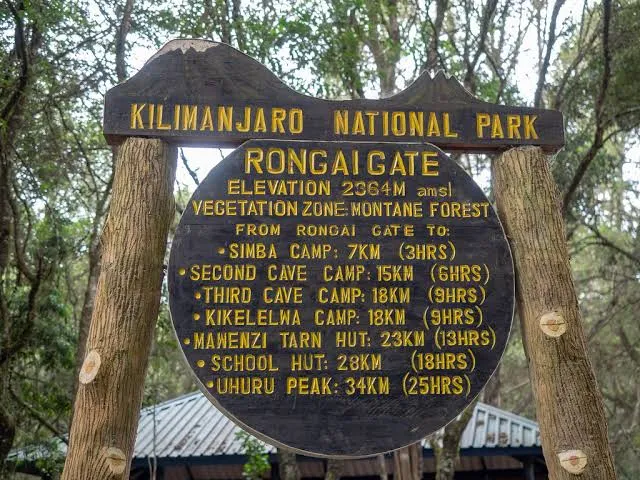
After an early breakfast at your Moshi hotel, you will be transferred by road (approximately 3–4 hours) to the Rongai Gate, located on the northern side of Kilimanjaro near the border with Kenya. This less-traveled route offers a unique perspective of the mountain, with breathtaking views and a quieter, more pristine trail.
At the gate, the trekking team will finalize registrations and permits, and you’ll meet the porters who will carry supplies throughout the climb. Once everything is ready, your Kilimanjaro adventure officially begins. The trek starts on a winding path that ascends gently through lush cultivated farmlands, pine forests, and bamboo vegetation. The trail is rich in birdlife, and if lucky, you might spot the black-and-white Colobus monkeys swinging from the treetops.
After about 3–4 hours of hiking at a relaxed pace, you will arrive at Simba Camp (2,600m), situated near the first cave. The camp offers panoramic views across the Kenyan plains below, especially beautiful at sunset. Upon arrival, your tents will be ready, and you’ll enjoy a warm dinner prepared by the cook before retiring for your first night on the mountain.
This day is relatively short and designed to ease you into the trek, allowing your body to begin adjusting to the altitude. The fresh air and peaceful surroundings set the tone for the adventure ahead.
Elevation Gain: 650m (1,950m → 2,600m)
Hiking Time: 3–4 hours
Accommodation: Simba Camp (tented)
Meals: Breakfast, Lunch, Dinner
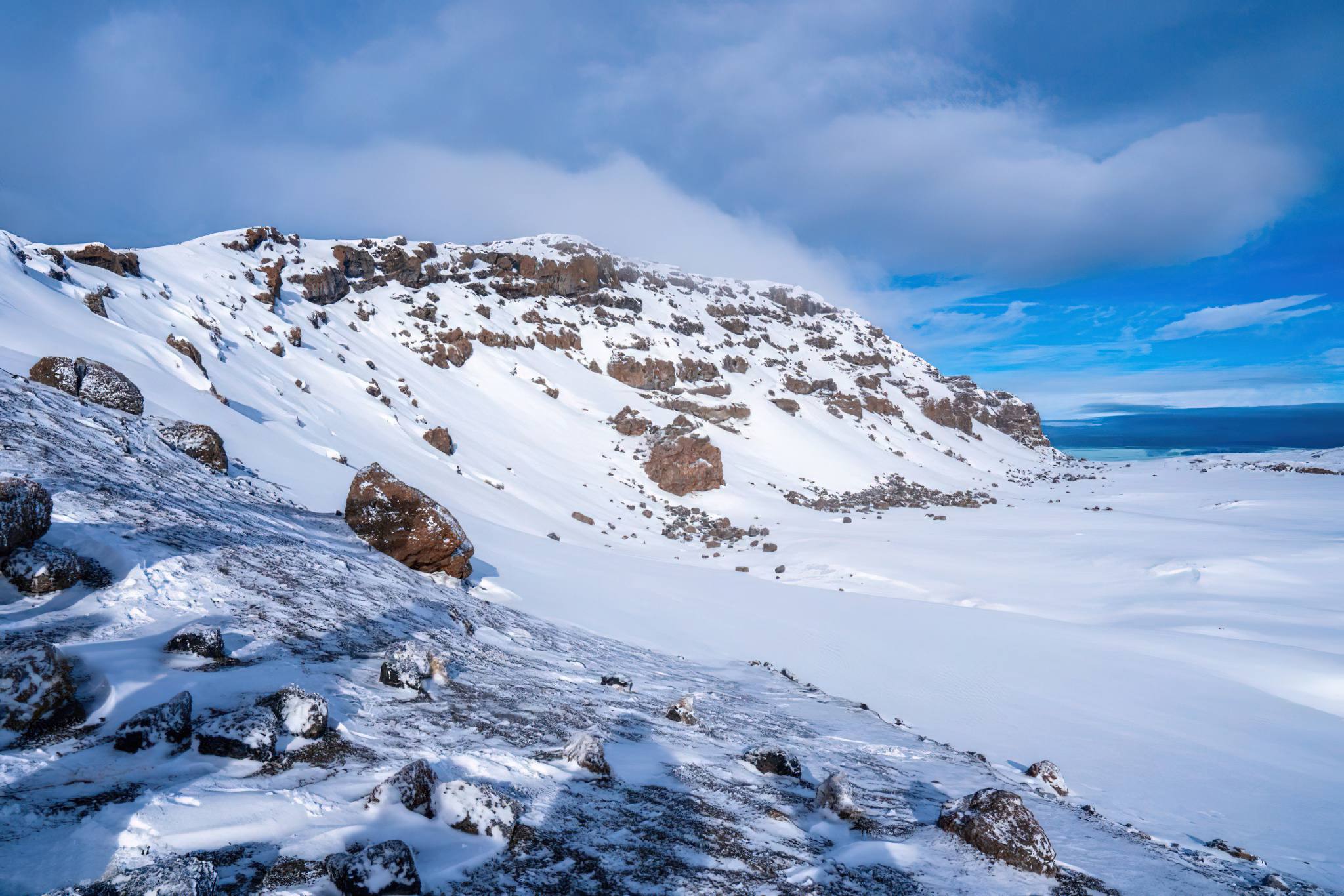
After an early breakfast at Simba Camp, you will begin your ascent into the alpine moorland zone, where the vegetation becomes sparse and the terrain opens up to dramatic views of Mawenzi Peak and the northern slopes of Kilimanjaro. Today’s hike is slightly longer and steeper, designed to help your body acclimatize gradually to higher altitudes.
The trail passes through vast heather fields, giant lobelias, and rocky outcrops, providing plenty of opportunities for photos and short rest stops. Along the way, you’ll experience the stark beauty of Kilimanjaro’s northern face, with panoramic views across the Kenyan plains and the mountain’s rugged ridges. Your guide will continue to monitor your pace, ensuring a steady and safe ascent.
After approximately 5–6 hours of trekking, you’ll arrive at Kikelewa Camp (3,600m), nestled in a picturesque valley surrounded by giant heathers and rocky formations. Here, the cook team will have your tents set up, and you can relax, hydrate, and enjoy a warm meal while taking in the spectacular sunset over the northern slopes.
This camp is a great location to rest and acclimatize for the more challenging days ahead. The cool evening air and high-altitude environment will begin preparing your body for the summit push.
Elevation Gain: 1,000m (2,600m → 3,600m)
Hiking Time: 5–6 hours
Accommodation: Kikelewa Camp (tented)
Meals: Breakfast, Lunch, Dinner
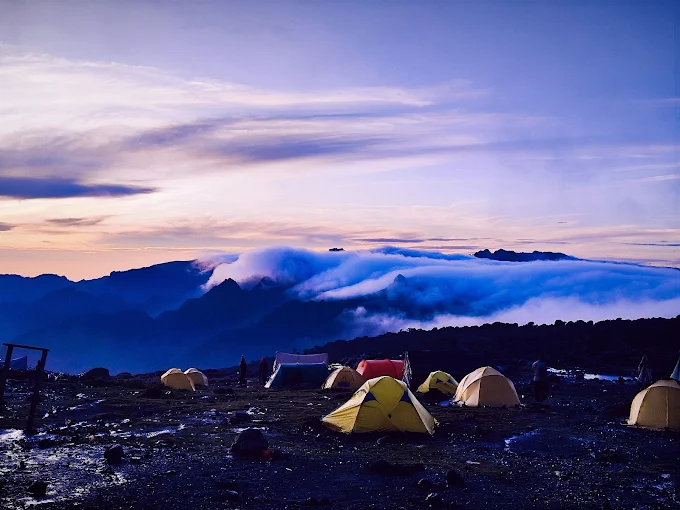
After breakfast at Kikelewa Camp, you’ll begin today’s trek, moving deeper into the alpine desert zone of Kilimanjaro. The trail gradually ascends over rocky ridges and open plains, offering expansive views of Mawenzi Peak on your right and the distant Kenyan plains below. Today’s hike is slightly more challenging due to thinner air, so your guide will maintain a steady “pole pole” (slowly, slowly) pace to ensure proper acclimatization.
Along the way, you’ll trek through giant heathers, tussock grasses, and volcanic rock formations, a unique landscape that feels otherworldly. The climb is moderate, with short breaks to hydrate and take photos, making it an ideal preparation day before the summit push. Wildlife is limited at this altitude, but the dramatic scenery and mountain vistas make up for it.
After approximately 4–5 hours of hiking, you’ll arrive at Mawenzi Tarn Camp (4,300m), located near the base of the rugged Mawenzi Peak. The camp provides panoramic views and a peaceful environment to rest and recover. Here, you can take a short acclimatization walk nearby, soak in the scenery, and prepare for the summit day, which will begin late at night.
Dinner will be served at the camp, followed by an early night to conserve energy for the next day’s midnight ascent toward Uhuru Peak.
Elevation Gain: 700m (3,600m → 4,300m)
Hiking Time: 4–5 hours
Accommodation: Mawenzi Tarn Camp (tented)
Meals: Breakfast, Lunch, Dinner
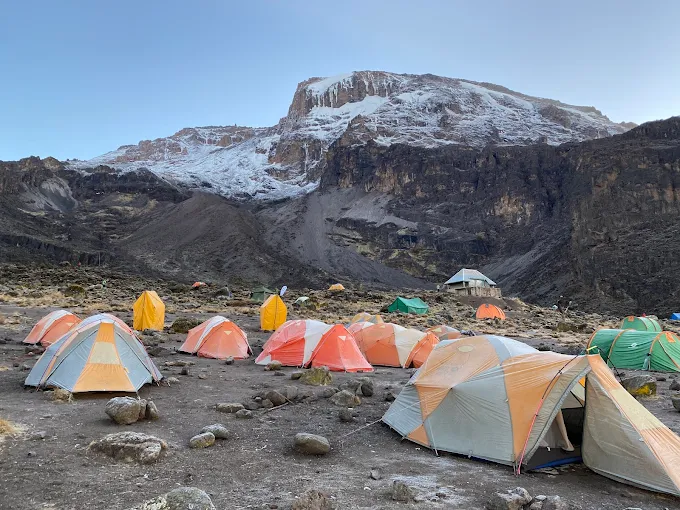
Today’s trek is relatively short but crucial for acclimatization before the summit push. After breakfast at Mawenzi Tarn Camp, you’ll begin your journey across the Saddle, a broad, high-altitude desert that connects Mawenzi Peak and Kibo Peak. The terrain is stark and barren, with loose volcanic gravel and minimal vegetation, creating a dramatic, moon-like landscape.
The hike is gentle but can feel demanding due to the altitude and exposure to wind and sun. You’ll move slowly, following your guide’s steady pace, with plenty of water breaks to avoid dehydration. As you cross the Saddle, the sight of Uhuru Peak towering above Kibo Crater becomes more prominent, giving you a clear view of your ultimate goal.
After about 5–6 hours of trekking, you’ll arrive at Kibo Hut (4,700m), your base camp for the summit attempt. Here, you’ll rest, hydrate, and enjoy an early dinner. Your guide will give a full briefing for the upcoming summit night—covering gear, clothing, and pacing.
You’ll retire to your tents early, as the summit push begins around midnight. This is the most challenging yet rewarding part of your Kilimanjaro adventure.
Elevation Gain: 400m (4,300m → 4,700m)
Hiking Time: 5–6 hours
Accommodation: Kibo Hut (tented camp)
Meals: Breakfast, Lunch, Dinner
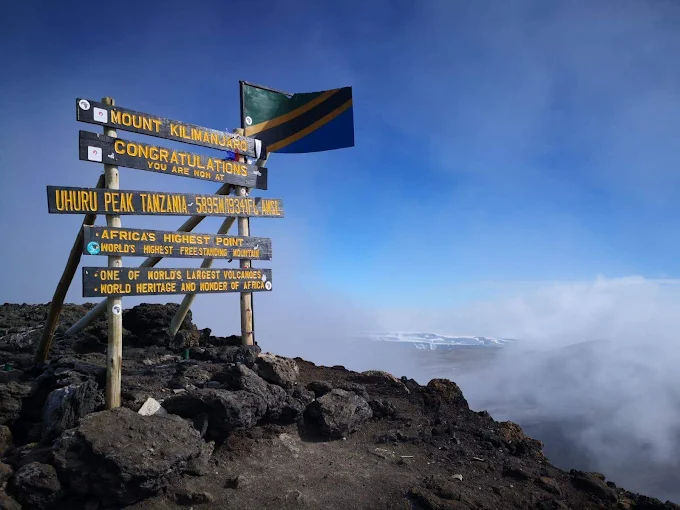
Your summit push begins just after midnight. After a light snack and hot tea, you’ll start the climb from Kibo Hut (4,700m) under a sky filled with stars. The trail ascends steeply over rocky scree and zigzags slowly up to Gilman’s Point (5,685m) on the crater rim. Reaching this point is a major milestone, with the first rays of sunrise painting the glaciers and offering breathtaking views over Africa’s highest peaks.
From Gilman’s Point, the trail continues along the rim to Uhuru Peak (5,895m), the highest point in Africa. Standing on the “Roof of Africa” is an unforgettable moment, a reward for your determination and endurance. Take in the views of the glaciers, crater, and endless plains below before beginning your descent.
The return journey follows the same path down to Kibo Hut, where you’ll rest briefly and enjoy a warm meal. Afterward, you’ll continue your descent through the Saddle and alpine desert down to Horombo Hut (3,720m), where the air is thicker and the terrain greener.
This is a long and demanding day, but also the most rewarding of your trek.
Elevation Gain: +1,195m (4,700m → 5,895m)
Elevation Loss: –2,175m (5,895m → 3,720m)
Hiking Time: 11–14 hours total
Accommodation: Horombo Hut (tented camp)
Meals: Breakfast, Lunch, Dinner
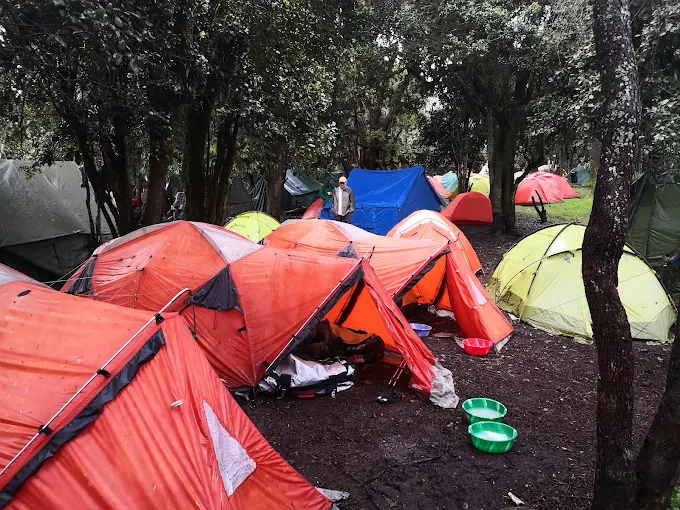
After breakfast at Horombo Hut, you’ll begin your final descent through the montane forest zone toward Mweka Gate. The trail winds downhill through giant ferns, moss-covered trees, and lush vegetation, providing a refreshing contrast to the barren high-altitude zones you crossed earlier.
The descent takes approximately 4–5 hours, during which you’ll pass through the forested trails filled with vibrant birdlife and the occasional glimpse of wildlife. Trekking poles are helpful for stability on this final stretch.
Upon reaching Mweka Gate (1,640m), you’ll complete your registration with the Kilimanjaro National Park authorities. Here, you will be awarded your official summit certificate, recognizing your successful climb. Take a moment to celebrate with your team and guides—this is the culmination of your achievement!
From the gate, a vehicle will transfer you back to Moshi or Arusha, where a hot shower, comfortable bed, and celebratory meal await. This marks the official end of your Kilimanjaro adventure, leaving you with unforgettable memories and a sense of accomplishment.
Elevation Loss: 2,080m (3,720m → 1,640m)
Hiking Time: 4–5 hours
Habitat: Montane forest
Accommodation: Hotel in Moshi or Arusha
Meals: Breakfast, Lunch

Download this tour's PDF brochure and start your planning offline.
Let’s clarify your confusions. Here are some of the Frequently Asked Questions which most of our client asks.
Looking for more info? Send a question to the tour agent to find out more.
The best seasons are January–March and June–October when the weather is generally clear and dry. The Rongai Route is less crowded and has a drier climate, making it ideal even during the rainy season.
The Rongai Route is considered one of the easier routes on Kilimanjaro because of its gradual ascent. However, climbing to 5,895m (Uhuru Peak) requires good physical fitness, mental endurance, and proper acclimatization.
No technical climbing experience is required. The trek is a high-altitude hike, not a technical climb. A good level of fitness and preparation will increase your chances of success.
Accommodation is in tented camps, equipped with sleeping tents, dining tents, and toilets. Comfortable mattresses, sleeping bags, and private tents are provided by our team.
On average, you will hike 4–7 hours per day, except on summit night, which is the longest and most challenging—lasting 10–14 hours.
You’ll need proper trekking gear such as waterproof hiking boots, warm layers, thermal base layers, down jacket, gloves, hat, and headlamp. A detailed packing list will be shared upon booking.
Yes! Climbers who reach Uhuru Peak (5,895m) receive a gold certificate, while those who reach Gilman’s Point (5,681m) receive a green certificate from Kilimanjaro National Park.
Absolutely! We can arrange safari tours in Serengeti, Ngorongoro, Tarangire, or a relaxing beach holiday in Zanzibar after your Kilimanjaro adventure.